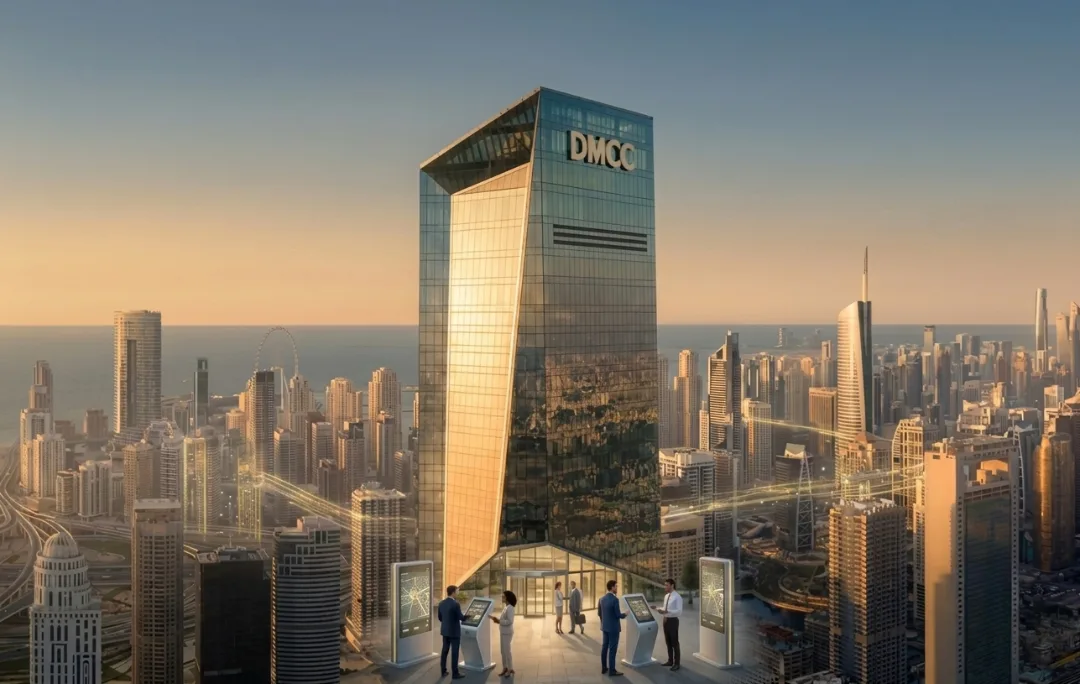

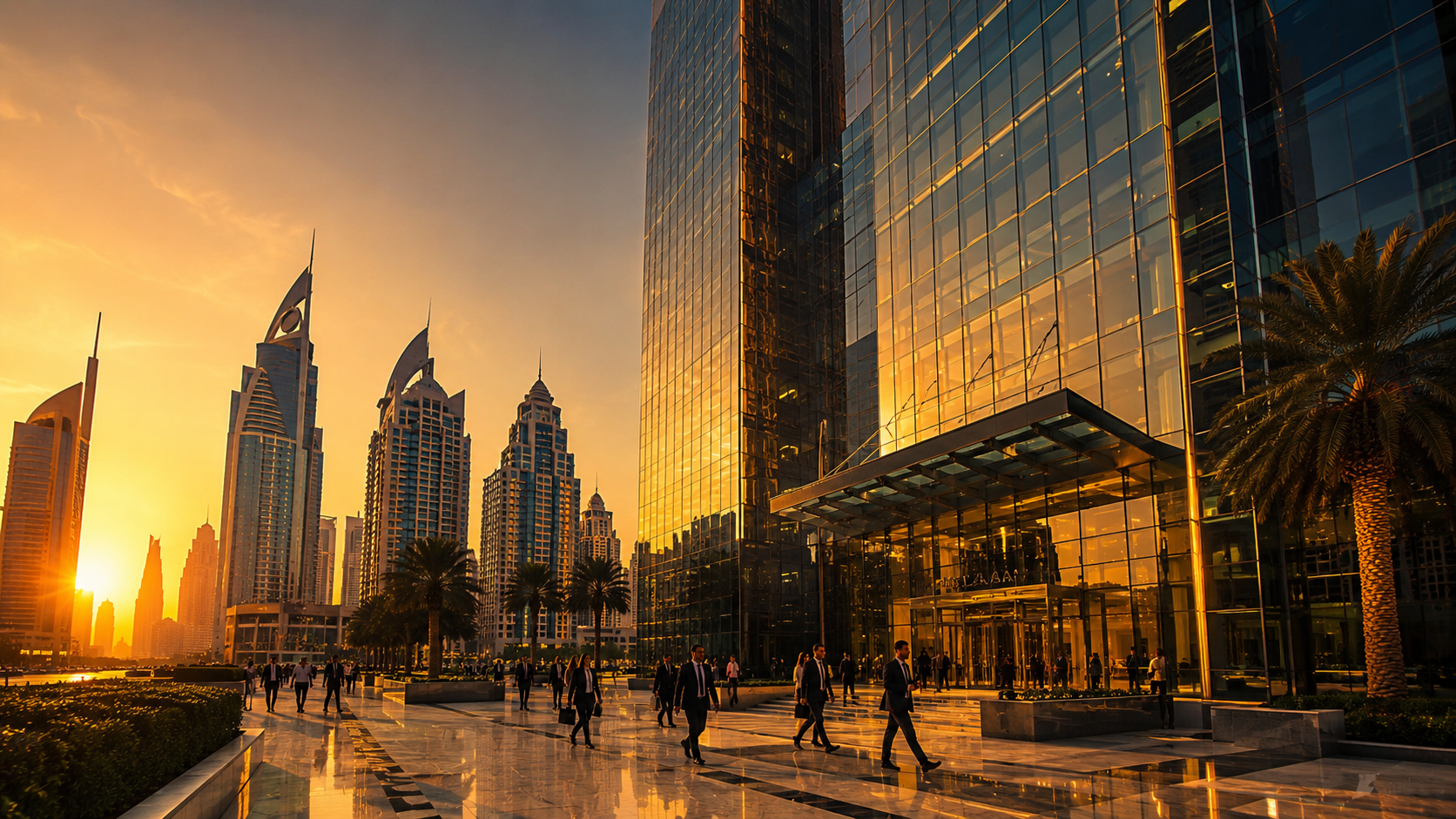
The UAE's commercial real estate market continues to prove its resilience.
Despite ongoing geopolitical tensions across the Middle East, office markets in Dubai and Abu Dhabi delivered another strong quarter in early 2026, with rents climbing sharply and vacancy rates falling to some of the lowest levels ever recorded.
The latest market data paints a clear picture: businesses remain committed to the UAE, demand for premium office space continues to outpace supply, and landlords remain firmly in control of the market.
For investors and occupiers alike, the message is becoming increasingly difficult to ignore — high-quality office space in the UAE is becoming one of the region's scarcest assets.
Dubai's Prime Offices Are Almost Fully Occupied
Dubai may have one of the largest office markets in the region, but finding premium space is becoming increasingly challenging.
The emirate's total office inventory now stands at around 101.1 million square feet. While several new projects were completed during the first quarter of 2026, overall supply remains tight where demand is strongest.
Citywide vacancy rates stood at 7.3%, but the picture changes dramatically when looking at prime locations.
Vacancy in Dubai's top-tier office buildings has dropped to just 0.7%, meaning the city's most sought-after business districts are effectively full.
This shortage has pushed rents higher.
Average office rents increased by around 14% year-on-year, while prime office rents surged by 16%, reflecting strong competition for Grade A space. Occupancy across premium buildings remains close to 95%, underlining the continued appetite from local and international businesses.
What makes this growth particularly notable is that it is not driven by speculation.
Instead, it reflects years of limited supply, strong economic expansion, and Dubai's growing appeal as a regional headquarters for multinational companies.
Businesses Are Staying Put
Interestingly, leasing trends suggest companies are becoming more selective rather than less confident.
New office contracts in Dubai declined during the quarter as some businesses delayed expansion plans amid regional uncertainty. However, lease renewals increased significantly.
In other words, companies already operating in Dubai are choosing to stay.
This trend became particularly visible in March 2026, when several multinational firms temporarily shifted employees to remote working arrangements due to regional tensions. While new lease activity slowed, the underlying demand for office space remained strong.
The slowdown appears to have been temporary rather than a sign of weakening market fundamentals.
Abu Dhabi Is Facing an Extreme Shortage of Prime Space
If Dubai's office market is tight, Abu Dhabi's situation is even more remarkable.
The capital's prime office vacancy rate has fallen to just 0.1%.
That figure is so low that many market observers describe it as virtually zero availability.
Across the entire city, vacancy sits at only 1.4%, while occupancy has climbed above 98%.
As expected, rents continue to move upward.
Prime office rents in Abu Dhabi increased by nearly 12% compared with the same period last year, while several market reports suggest some premium assets have recorded even stronger growth.
Demand is being driven by businesses operating in finance, energy, technology, and professional services, all of which continue to expand their presence in the capital.
Meanwhile, the supply pipeline remains limited.
New developments such as Shams Tower on Al Reem Island have added some capacity, while projects including Masdar City Square and The Link are attracting strong interest even before completion.
Still, many analysts believe new supply will not be enough to balance the market in the near future.
The Flight to Quality Is Reshaping the Market
One of the biggest trends shaping the UAE office market is what real estate experts call the "flight to quality."
Businesses are increasingly prioritizing modern, sustainable, and well-connected office spaces, even if it means paying higher rents.
Companies are looking for:
- Prime business locations
- Sustainable and energy-efficient buildings
- High-quality amenities
- Flexible work environments
- Better access to talent and transport networks
As a result, premium offices continue to outperform older buildings.
Many businesses are willing to relocate from secondary properties if they can secure space in a modern Grade A development.
This shift is creating a clear divide within the market: premium assets are thriving, while older buildings face greater competition for tenants.
Retail Property Also Shows Strong Performance
The positive momentum isn't limited to offices.
Dubai's retail market also remained healthy during the first quarter of 2026.
Retail inventory reached around 56 million square feet, while vacancy tightened to approximately 4.8%.
Consumer spending remained stable, helping neighbourhood retail centres and domestic-focused shopping destinations perform well.
However, tourism-dependent retail locations experienced slightly softer conditions due to lower international visitor numbers linked to regional geopolitical developments.
In Abu Dhabi, premium shopping malls continued to command strong rental rates.
Landlords at leading malls maintained a strong negotiating position thanks to healthy footfall, stable occupancy levels, and continued demand from retailers seeking prime locations.
Limited Supply Means Rents Could Rise Further
Looking ahead, market experts believe supply constraints will remain the biggest factor shaping the UAE office market.
Most analysts expect limited new office developments to be completed before 2027, especially within premium business districts.
Construction costs and global supply chain challenges continue to affect development timelines, making it difficult for new projects to enter the market quickly.
As a result, vacancy rates are expected to remain low, while rental growth could continue over the next several years.
For companies looking to expand or relocate, timing will become increasingly important.
Prime office options are limited, and the best spaces are often secured long before they officially become available.
A Market Built on Strong Fundamentals
The strength of Dubai and Abu Dhabi's office markets is not the result of short-term momentum.
It is being supported by long-term trends, including:
- Economic diversification
- Population growth
- Increased foreign investment
- Expansion of multinational companies
- Government support for business and innovation
- Limited supply of premium office space
These factors have created one of the strongest commercial property markets in the Middle East.
Even amid regional uncertainty, the UAE continues to attract global businesses seeking stability, connectivity, and access to international markets.
Conclusion
The first quarter of 2026 has reinforced the UAE's position as one of the region's most resilient commercial real estate markets.
Dubai continues to experience strong demand for premium offices, while Abu Dhabi faces an almost unprecedented shortage of prime space. Rental growth remains healthy, occupancy rates are near record highs, and the development pipeline remains limited.
For landlords and investors, these conditions provide a favourable environment for growth.
For businesses searching for quality office space, however, the market is becoming increasingly competitive.
As demand continues to outpace supply, the UAE's office sector appears set to remain one of the strongest performers in the Middle East for years to come.